Direct answer for retailers and importers
How do I launch a private label planter line under my own brand?
November 9, 2026 · 6 min read
 By Janice Anastasio · Editor, Planter Happiness
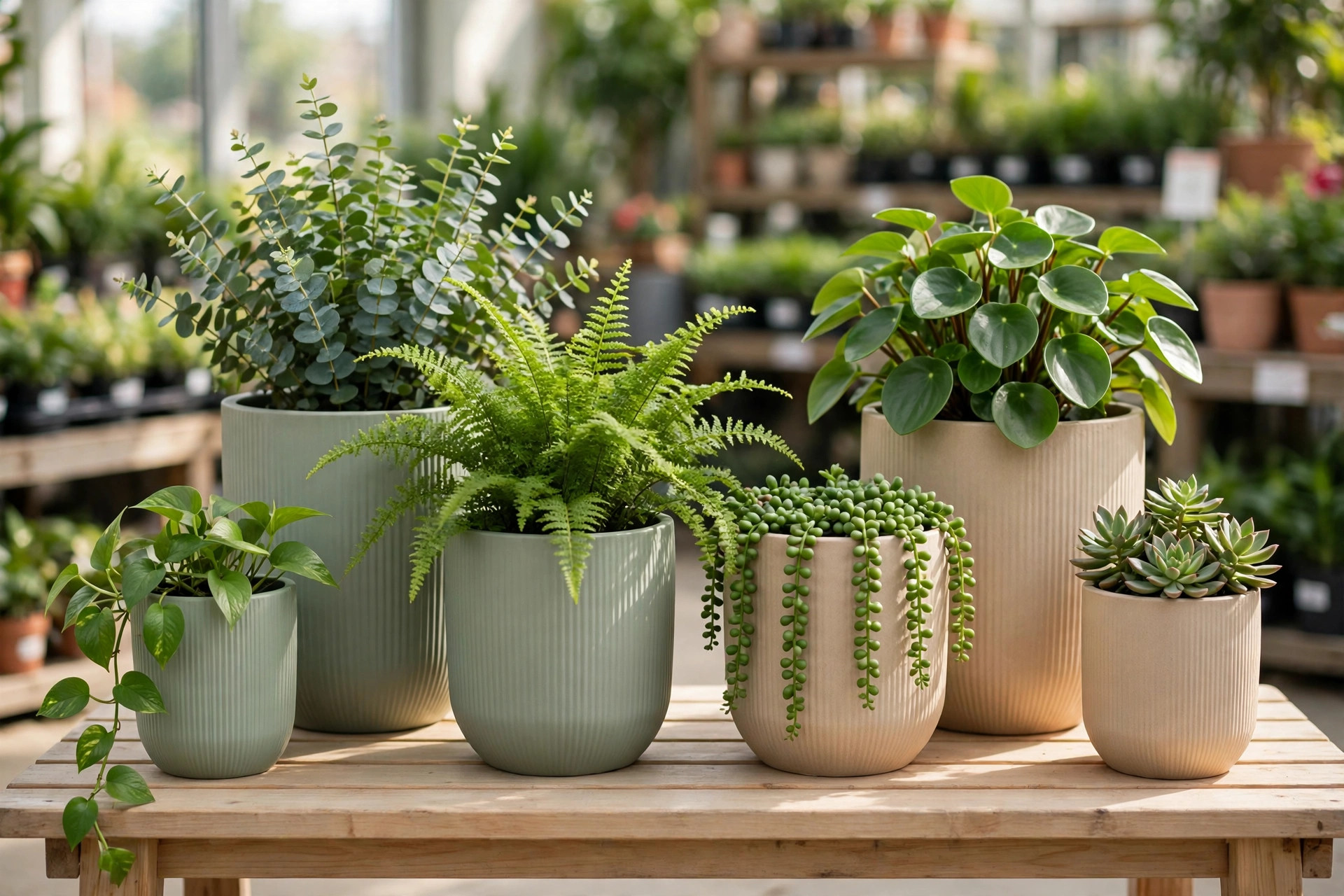
You launch a private label planter line in six steps: pick proven designs that already sell in your market, adapt them with your glaze family and size ladder, approve physical samples in your colours, supply your packaging and labels, confirm the order by the full container, and inspect before the container seals. The point is, you are not inventing a planter from scratch and you are not selling the same unbranded pot as the shop down the road. You are taking designs with a track record and making the range recognisably yours — which is why private label launches in weeks-to-months, not the seasons a fully custom program takes.
Planter Happiness runs private label programs as part of our normal process: designed in Arizona, manufactured in China and Vietnam, shipped by the container under the buyer's brand. This page is the launch sequence we walk buyers through, in the order it actually happens. Our guide to private label garden decor covers the wider decor side of the same model; this page stays on the planter line itself.
Steps 1–3: choose the range, make it yours, approve it in your hands
Start from what sells. The most common launch mistake is falling in love with shapes that have never been tested in a store. A private label line should open with proven families — the sizes and silhouettes your customers already buy — taken from a working wholesale catalogue, not from a sketchbook. Eight to twelve designs across three or four size steps is a credible first range: enough to build a display, few enough to keep the container math clean.
Then make it yours. This is the step that separates private label from simply re-boxing stock: a glaze family in your colours, a size adjusted for your market, a saucer added where your customers plant outdoors and removed where they do not. None of that needs new molds, so none of it carries tooling cost — but it is what stops your line being price-compared, item for item, against a competitor selling the factory's standard finish. If you later want shapes nobody else has, that is an OEM step — see who makes OEM ceramic planters for retailers and distributors — and our explainer on white label planters sets out where each model starts and stops.
Approve samples physically, in your glazes, before anything else moves. Glaze colour shifts between a screen, a sample tile and a full production run; a sample pot on your own shelf, next to the rest of your assortment, settles questions no photo can. Budget two to three weeks for this round and do not skip it to save time — it is the cheapest correction point in the whole launch.
Steps 4–5: packaging is the brand, and the container is the math
To the end customer, your brand is mostly the packaging: the box, the label, the barcode, the care card. Supply print-ready artwork early — packaging approval runs alongside production, and artwork that arrives late is the most common avoidable delay we see. Keep the pack honest and retail-ready: pot dimensions, drainage, frost guidance and your brand, nothing the pot cannot live up to.
The order itself is built around the container. Private label minimums are set per design-and-glaze combination — usually a few hundred pieces — by kiln and packing economics, and the program as a whole fills a 40ft container, or a mixed container across families. That is not an arbitrary hurdle: freight is the largest single variable in your landed cost, and a full container is what makes an own-brand line land at a price your margin can survive. Our breakdown of the total landed cost of importing a container of ceramic planters shows how that math runs, line by line, and our MOQ guide explains why the per-design minimums sit where they do.
Step 6 and the timeline: inspect, then work backwards from your season
Finish with a pre-shipment inspection before the container seals: counts, glaze consistency, breakage packing, labels and barcodes checked against the order. Once a container is on the water, every fix costs ten times what it costs on the factory floor — the inspection is the last cheap moment to catch a wrong barcode or a glaze that drifted.
All in, a launch runs about 10 to 14 weeks from a settled design list to a container on the water — samples, packaging approval, six to eight weeks of production, inspection and loading — plus ocean transit on top. So work backwards from the season you are selling into: a spring program needs its order confirmed in the autumn, not in January. Tell us the range you have in mind, the market you sell into and the season you are aiming at, and we will map the launch against real dates.
Frequently asked questions
How do I launch a private label planter line under my own brand?
Choose proven designs, adapt the glazes and sizes, approve physical samples, supply your packaging and labels, order by the full container, and inspect before it seals. Starting from designs that already work is what makes private label faster and cheaper than a fully custom program.
What is the minimum order?
A full container per order — one 40ft, or a mixed container across families — with a minimum of usually a few hundred pieces per design-and-glaze combination. Your branding itself does not raise the minimum; new molds would, and private label does not need them.
How long does a launch take?
Typically 10 to 14 weeks from a settled design list to a container on the water, plus transit. Work backwards from your selling season.
Private label, white label or OEM — which should I start with?
Private label, for most retailers: white label changes almost nothing but the name, and OEM means tooling cost and long timelines. Launch private label first; add OEM hero pieces once the brand is selling.
Not sure whether to start with white label or private label? Our comparison of which suppliers offer white label planters for garden retailers lays out the routes and the trade-offs. Tell us the range you want under your name, who you sell it to, and the season you are aiming at — we will give you a straight launch plan with dates and container math. Start the conversation.