
Branding guide
Private label garden decor: build your own brand by the container
October 2026 · 6 min read
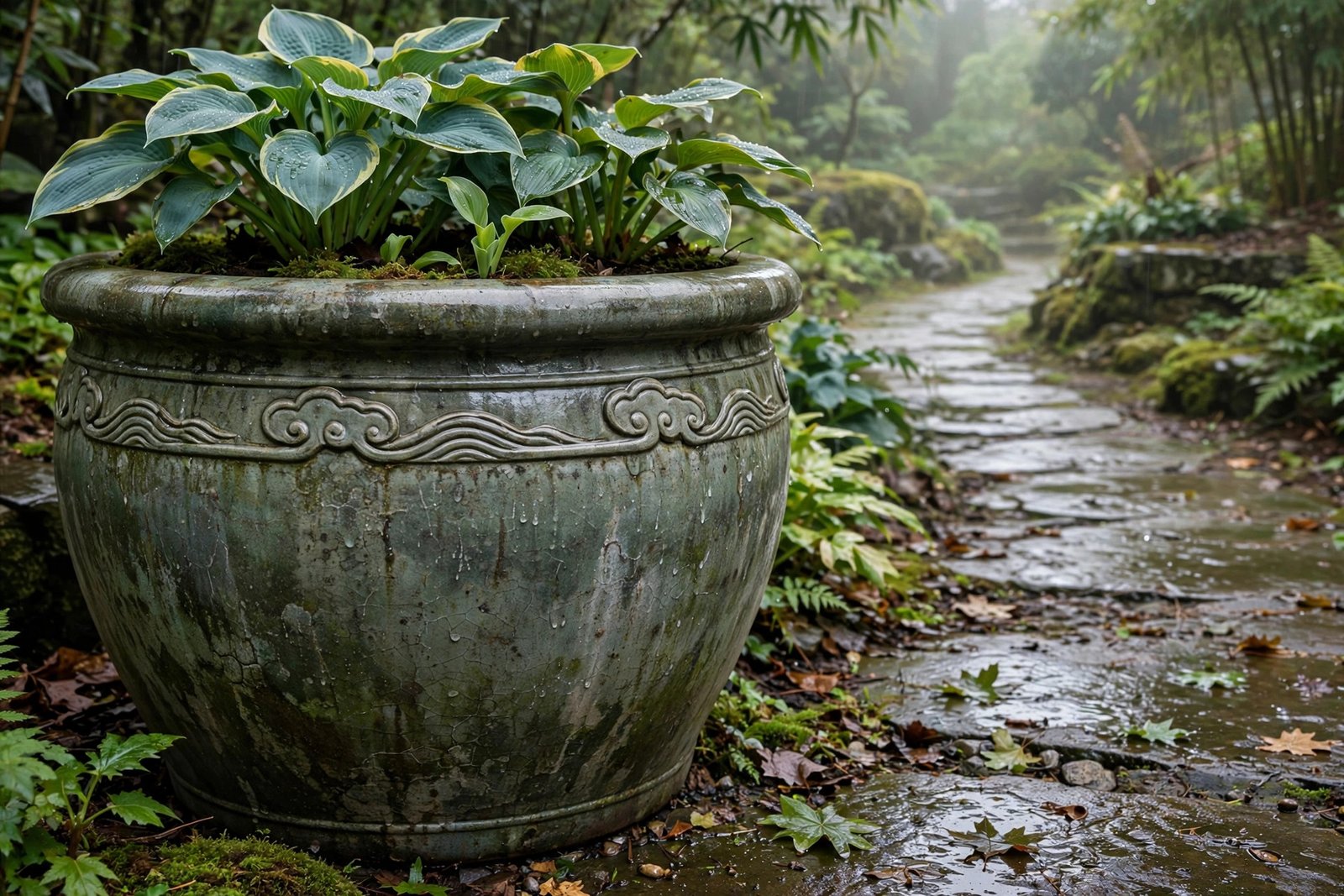
Private label garden decor is the middle path most successful importers and retailers actually take. You are not inventing a planter from scratch, and you are not selling the exact same unbranded pot as everyone else. You take proven designs, adapt them for your market — your glaze choices, your sizes, your packaging, your brand — and you sell them as yours. Done well, it gives you a range customers can only buy from you, without the tooling cost and long timelines of a fully custom program.
What private label garden decor actually includes
A real private label program is more than a sticker. When you compare suppliers, check that these pieces are on the table:
- Curated designs with your tweaks. Existing shapes adapted for you — a different glaze family, a resized bestseller, a saucer added or removed.
- Your branding throughout. Hang tags, labels, barcodes, and care cards in your name, applied at the factory — not re-boxed in your warehouse.
- Retail-ready packaging. Export cartons that double as shelf-ready packs, with your artwork, your SKU codes, and pallet plans matched to your warehouse.
- Exclusivity where it matters. Your glaze-and-design combination, and your packaging, are not sold to the shop down the road. Ask what exclusivity is actually offered — by design, by colorway, or by territory — and get it in writing.
That last point separates private label from white label, where any competitor can order the identical item tomorrow. Private label adapts the product itself, so your range feels distinct on the shelf.
Private label vs. white label vs. OEM
Suppliers use these terms loosely, so pin them down before you compare quotes:
- White label: a standard design, your sticker. Fastest and cheapest, zero differentiation.
- Private label: an adapted design — your glazes, sizes, branding, and packaging. Moderate minimums, real shelf differentiation, much faster than custom.
- OEM: your exclusive design from the mold up. Highest differentiation, but you pay for tooling and wait longer. We explained that route in detail in our guide to OEM ceramic planters.
Many buyers run both: private label for the core range that must land for spring, and OEM for a signature piece a season later. They share containers, factories, and QC.
What drives the cost
Private label pricing looks like a simple per-piece price, but four things move it most:
- How much you change. A new glaze on an existing mold is cheap. A resized shape may need a new mold — at that point you are drifting into OEM economics.
- Packaging. Printed retail boxes, inserts, and hang tags add real cost per piece. Plain export cartons with applied labels cost far less. Decide what your channel actually needs: a garden center selling off a bench needs less packaging than a chain shipping to stores.
- Volume per SKU. Kilns fire in batches. Small runs of many colorways cost more per piece than sensible runs of fewer ones — the same minimum-order logic we broke down for custom ceramic planter MOQs.
- Freight. Still the biggest variable, and the one buyers underestimate most.
On freight: Far East–US container spot rates hit their 2026 peak in early October — about $11,523 per 40ft container to the US East Coast, per Xeneta, with elevated costs expected through year-end. Spread over a well-packed 40ft container of mid-size planters and decor, that is roughly $2.30–$2.90 per piece in ocean freight alone. Compare suppliers on landed cost per sellable piece, not on the factory price — the cheapest quote at the factory gate is often the most expensive range on your shelf.
Browse our wholesale range to see the design families private label programs typically build on — planters, saucers, and coordinated garden decor sets that were designed to mix in one container.
The container math behind a private label range
Ocean freight is sold by the box, and a half-empty container costs nearly as much to ship as a full one. That single fact shapes every sensible private label assortment. A 40ft container holds roughly 58 cubic meters — enough for a coordinated range of, say, three planter families in two glazes each, plus matching decor pieces, nested and packed to use the space.
That is why mixed containers are the standard structure. Instead of betting a whole container on one design, you spread it across 4–6 SKUs that sell together: the hero planter, the smaller companion sizes, and the decor items that raise the basket. Each SKU reaches a factory-efficient quantity, your range arrives as one coherent story for the shelf, and no single slow seller can sink the shipment. It is the structure our development process is built around.
How a private label program runs, step by step
- 1. Pick the range. Choose proven designs and decide your adaptations — glazes, sizes, sets. Anchor choices to your target retail price and work backwards to a landed cost that leaves your margin.
- 2. Approve samples in your branding. Physical samples with your glaze tweaks, tags, and packaging mock-ups. This is where color is judged — never from a screen.
- 3. Lock packaging and labeling. Artwork, barcodes, carton marks, and pallet plans signed off before production, not while the container is being packed.
- 4. Production and QC. Typically 30–60 days depending on volume and kiln scheduling, with inspection before the container seals.
- 5. Ship as one range. One mixed container, one arrival, one shelf story — timed to land before your selling season, not during it.
All in, a first private label range usually takes about two to four months from selection to port — faster than OEM because the molds already exist, slower than white label because your adaptations and packaging are genuinely yours. Reorders are quicker: the glazes are dialed in, the artwork is on file, and the factory knows your spec.
Red flags to watch for
- A supplier who will put your label on anything but cannot change a glaze, a size, or a carton is offering white label at private label prices.
- No written answer on exclusivity — who else can buy your exact glaze-and-design combination, and where.
- Packaging treated as an afterthought. Retail-ready means the box, the barcode, and the pallet were planned before production.
- Quotes that ignore freight, or a supplier who cannot talk container packing. Landed cost is the only cost that matters.
The bottom line
Private label garden decor is how importers and retailers stop competing on the same unbranded pottery and start building a range that belongs to them — without betting the season on untested custom designs. Pick proven shapes, make them unmistakably yours, fill the container properly, and buy on landed cost.
Tell us what kind of range you want to sell under your own name — designs, glazes, volumes, and your target price point — and we will tell you straight what a private label program would look like and cost. Start the conversation.