
Buyer's guide for importers
Ceramic pots manufacturer for importers: how to vet one before you commit
November 7, 2026 · 6 min read
 By Janice Anastasio · Editor, Planter Happiness
Finding a ceramic pots manufacturer for importers is easy. Finding one you can trust with a full container — your money, your season, your customers — is the harder job, and most of the vetting happens before price ever enters the conversation. I sit on the supply side of this trade, and the importers who rarely get burned run the same checks in the same order: is this a real maker, can they repeat what they sample, and will the pots arrive sellable? This guide is those checks, in plain terms.
First check: is it a manufacturer, or a listing?
A marketplace page is not a factory. Plenty of listings that present as manufacturers are trading companies reselling another plant's output, which matters the first time something goes wrong — a glaze drifts, a size comes in short, and the seller cannot fix it because they never controlled the kiln. Ask direct questions and listen for direct answers. Who owns the molds? Where are the kilns, and how many firings run per week? Can the same person quoting you also change a wall thickness or a drainage spec? A real manufacturer answers in specifics. A reseller answers in reassurances.
Then ask what they make themselves and what they buy in. Honest makers are clear about it — saucers, decor pieces or a specialty finish may legitimately come from a partner workshop, and that is fine as long as it is disclosed and the quality control sits with one accountable party. Our own model is open about its structure: we design in Arizona and manufacture in China and Vietnam, and our ceramic pots manufacturers overview explains how that split works and why. What you are screening for is not purity. It is accountability — one party who owns the outcome from clay to carton.
A useful tell is the sample. A manufacturer can sample your shape, your glaze and your packing, and tell you the mold cost and the timeline before you ask twice. Our guide to OEM ceramic planters walks through how that sampling sequence normally runs, and who makes OEM ceramic planters for retailers and distributors names the kinds of maker behind it. If every sample question turns into a catalogue photo and a minimum you cannot vary, you are probably talking to a listing, not a maker.
Second check: can they repeat the glaze, the size and the pack?
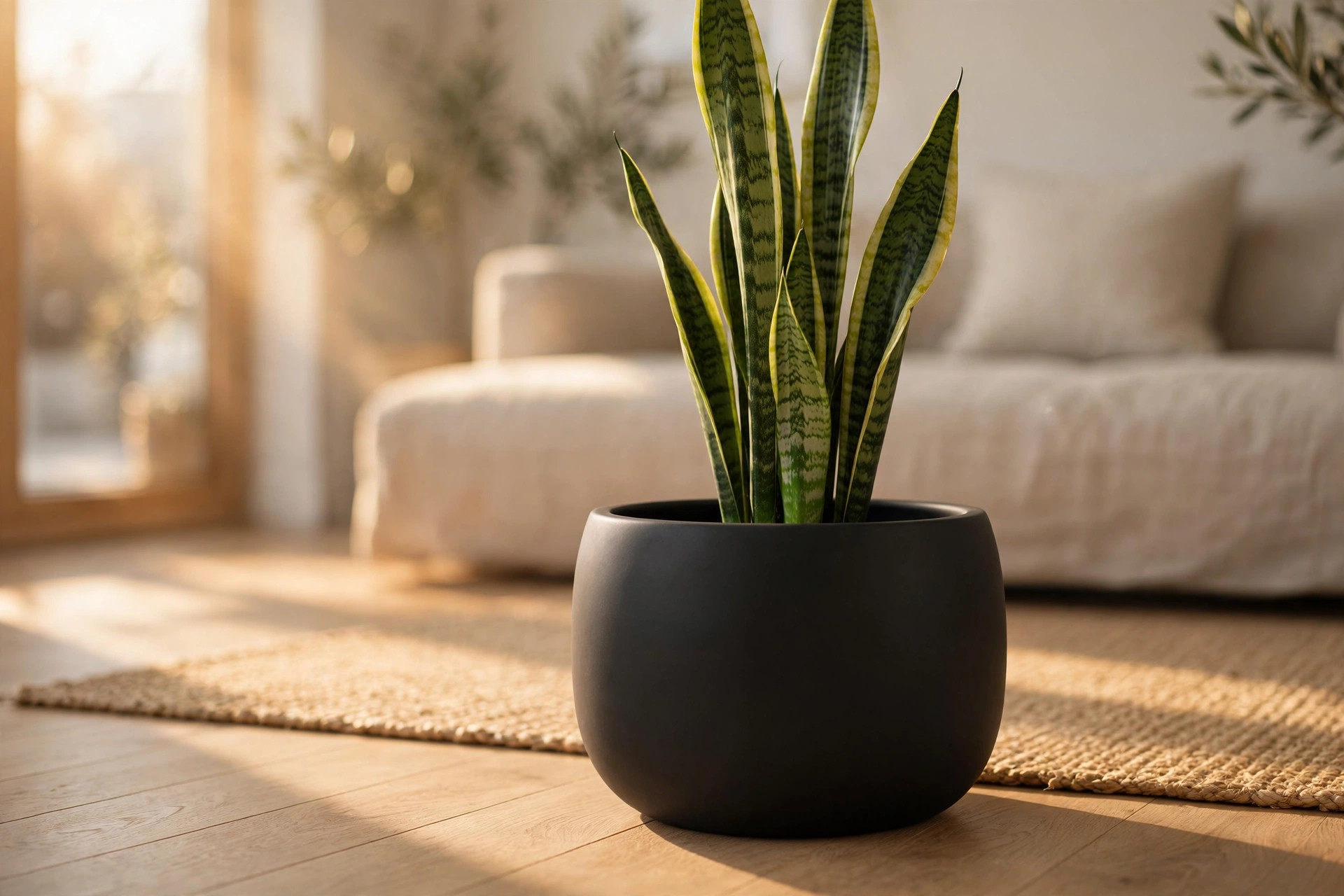
Ceramic is a fired material, and firing is where importers lose money quietly. The sample on your desk is one pot from one firing. Your container is thousands of pots from many firings, and the question is whether the last carton matches the first. The matte black planter pictured here is the honest example: matte finishes show every variation in temperature and glaze thickness, so a factory that holds a matte finish steady across a run has genuinely good kiln control. Ask how they handle glaze approval — a physical approved sample kept at the factory, checked against production — and what tolerance they work to on colour and dimensions. Our guide to ceramic planter quality control and pre-shipment inspection shows how those checks run in practice, from the first pieces out of the kiln to the sealed container.
Sizes deserve the same scrutiny. Importers sell in nested families, and nesting only saves freight if the sizes are made to nest — a millimetre of drift and the small pot no longer sits inside the large one. Check the full wholesale range as families, and ask whether the sizes were designed together or gathered. Then packing, which for an importer is not a detail but the difference between a sellable container and a claim. How are nested pots separated? What protects glazed surfaces in transit? How are cartons marked by family and size so your warehouse can receive without opening everything? Our process page shows the sequence we run; hold any manufacturer to the same level of detail.
Minimums belong in this check too, because they reveal whether the maker understands their own economics. A real factory can explain why a minimum exists — mold setup, kiln loading, packing-line runs — the way we break it down in our answer on MOQs for custom planters. A number with no reasoning behind it is a number that will move later.
Third check: the landed cost, and who carries the risk
Only now compare price — and compare it correctly, on landed cost per sellable pot: the pots, packing and branding, freight, duty and delivery, divided by what you can actually sell after breakage. Freight is the line that flips comparisons. Far East to US container spot rates hit their 2026 peak in early October at about $11,523 per 40ft container to the US East Coast, according to Xeneta, with elevated costs expected through year-end. At that level, tight nesting and disciplined packing are worth more than a small discount on the factory price.
Ask who carries each risk in writing: breakage above an agreed rate, glaze drift outside the approved tolerance, a missed sailing caused by late production. You will not get every risk transferred, and a manufacturer who promises to carry all of them is telling you what you want to hear. What you want is a short, explicit list — this is ours, this is yours, this is how we handle it — agreed before the deposit, not negotiated from opposite sides of an ocean after the container lands. Distributors running this same vetting at larger volume will find the container math in our guide to bulk ceramic pots for distributors useful alongside this one.
Planter Happiness is a ceramic pots manufacturer for importers who buy by the full container: designed in Arizona, manufactured in China and Vietnam, in nested families planned for the container as carefully as for the shelf. If you are vetting us, run these same checks — ask about the kilns, the glaze control, the packing and the risk list, and judge the answers the way you would judge anyone's. Tell us the range you are building and the season you are buying for, and we will give you minimums, timelines and a landed-cost picture in plain terms.
Tell us what you import, who you sell it to, and when you need it — we will tell you plainly whether a container program fits and what it should carry. Start the conversation.