
Manufacturing guide
OEM ceramic planters: how custom manufacturing actually works
October 2026 · 6 min read
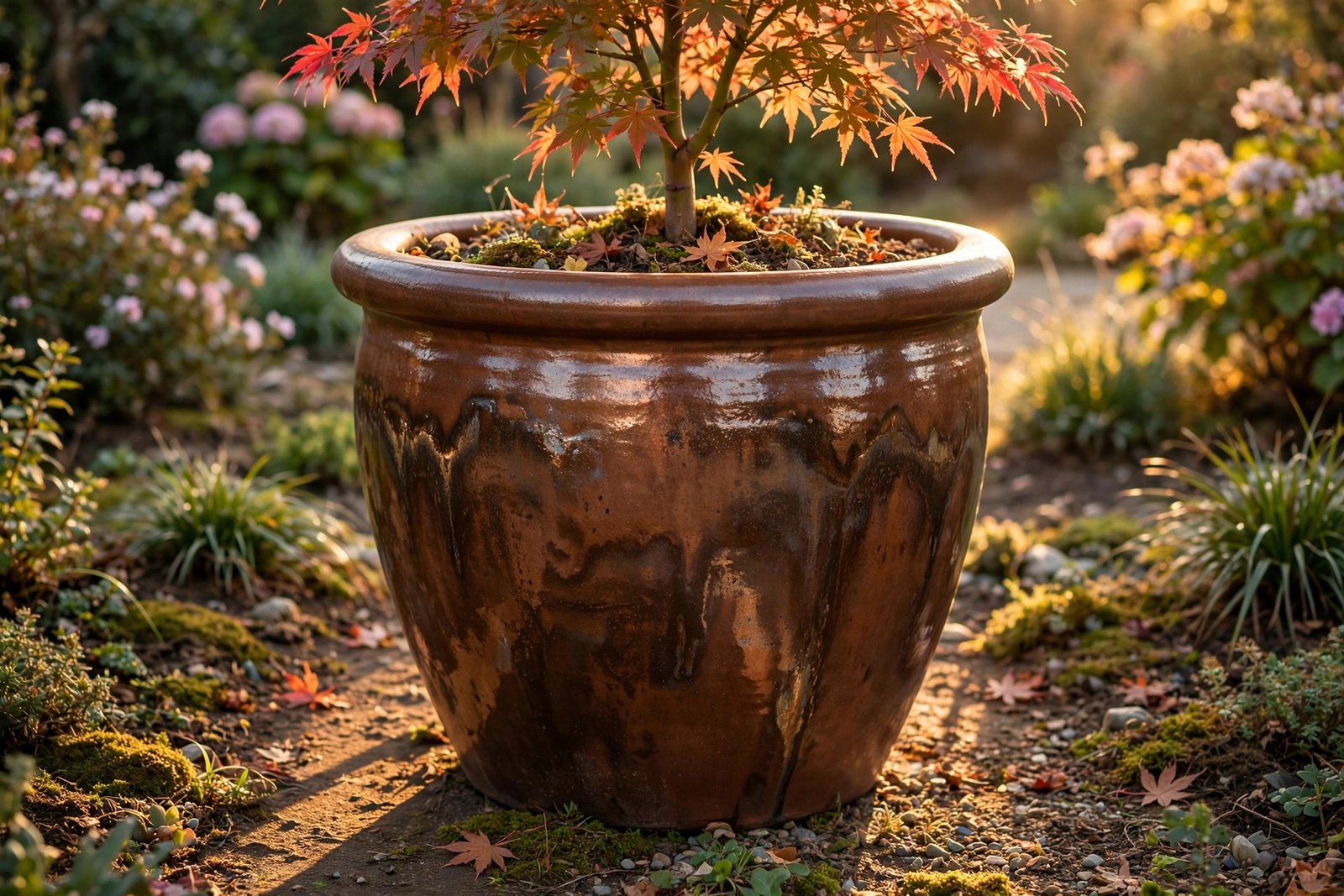
OEM ceramic planters — pottery manufactured to your own designs, in someone else's factory. Your shapes, your glazes, your brand on the box. It sounds like ordering from a catalog with your logo on it. It's not. Real OEM is a manufacturing partnership built on tooling, glaze chemistry, and kiln schedules — and the difference between understanding it and guessing at it shows up directly in your landed cost per unit.
What OEM means in ceramic planters
OEM stands for original equipment manufacturing. In pottery, it means a factory produces planters designed by you — or designed for you — usually on an exclusive basis. You bring (or commission) the design; the factory brings the molds, the kiln capacity, and the production know-how.
Here's what you're actually buying in an OEM ceramic planter program:
- Exclusive tooling. Molds cut for your shapes — nobody else gets to run them.
- Custom glaze formulas. Your colorways, mixed to your spec, often kept proprietary to your program.
- Your specifications. Clay body, firing temperature, wall thickness, drainage holes, sizing tolerances.
- Your packaging. Export cartons, barcodes, labeling, and palletization built around your warehouse.
One caution: the letters "OEM" get stamped on everything by trading companies that own no factory and no molds. Real OEM means tooling was made for you. If there's no mold with your name on the production schedule, it's not OEM — it's resale.
OEM vs. private label vs. white label
Suppliers use these terms loosely, so pin them down before you compare quotes:
- White label: the factory's existing design with your sticker on it. Fast and cheap — but any competitor can buy the same pot.
- Private label: an existing design adapted for you — your branding, maybe your glaze tweak or size adjustment. A reasonable middle ground.
- OEM: your exclusive design, from the mold up. Highest barrier to entry, highest differentiation, and the only one competitors can't copy off a shelf.
OEM also carries the highest minimums, because you're amortizing tooling. We broke down the MOQ math for custom ceramic planters separately — read that before you budget.
What drives OEM ceramic planter pricing
OEM quotes look simple — a per-piece FOB price — but six cost blocks sit underneath it:
- Tooling amortization. Mold costs spread across your run. The single biggest reason small OEM orders price badly.
- Materials. Clay body and glaze chemistry. Reactive and multi-tone glazes cost more than single dips — more raw materials, more rejects.
- Firing. Kiln loads are batch economics: a half-empty kiln costs nearly as much to fire as a full one.
- Labor. Hand-finishing, glaze wiping, and quality sorting scale with design complexity.
- QC and packing. Export cartons, corner protection, and palletization — the unglamorous part that decides how many pieces survive the voyage.
- Freight. The big one, and the one buyers underestimate most.
On freight: Far East–US container spot rates hit their 2026 peak in early October — about $11,523 per 40ft container to the US East Coast (Xeneta), with elevated costs expected through year-end. On a 40ft container of mid-size planters (roughly 4,000–5,000 pieces), that's around $2.30–$2.90 per pot in ocean freight alone, before trucking and duties. You can collect FOB quotes all day; buy on landed cost, or the cheapest factory quote will quietly become the most expensive program.
Browse our wholesale range to see the design families OEM programs typically build on.
The container math behind OEM ceramic planter orders
Ocean freight is sold by the box: a 20ft container holds roughly 28 cubic meters, a 40ft roughly 58 — and a half-empty container costs nearly as much to ship as a full one. So the economical OEM order is almost always "enough to fill a container," which for mid-size planters means roughly 3,000–6,000 pieces per 40ft per design family.
Few buyers want to bet a full container on one untested shape, which is why mixed-container programs are the standard structure: 3–4 SKUs — say, two planter designs plus a garden decor line — sharing one 40ft box. Each SKU hits factory-efficient quantities, and you don't go all-in on a single design. It's how most serious import programs are built, and it's the structure our development process is designed around.
How an OEM program actually runs
A straight OEM program, start to finish:
- 1. Brief. Sizes, look and feel, target retail price, volumes, timeline. The more specific, the faster everything after this goes.
- 2. Design and sampling. Drawings first, then physical samples — paid sampling, typically a few hundred dollars, so both sides take it seriously.
- 3. Mold making. Two to four weeks once the sample is approved.
- 4. Trial production. A short run off the real molds for your sign-off — glaze, size, finish, packing.
- 5. Mass production. Typically 30–60 days depending on volume and kiln scheduling.
- 6. QC, packing, ship. Inspection before the container seals, not after it lands.
All in, plan roughly three to five months from brief to port for a first program. Repeat orders run faster — the molds exist, the glaze is dialed in, and the factory knows your spec. That's the quiet payoff of OEM: the first container is the expensive one; every container after it gets cheaper and smoother.
We manufacture in China and Vietnam — if you're weighing the two, our buyer's guide to sourcing from Vietnam covers how to vet factories in either country.
Red flags in OEM conversations
- A "factory" that can't show you the factory — at minimum a live video walkthrough — is a trading company.
- Quotes issued without asking your sizes, glaze, volumes, or target price are guesses, not quotes.
- No sampling step, or free custom samples, means nobody's invested — expect surprises at the port.
- Vague answers on glaze chemistry or clay body mean they don't control production.
- Anyone promising custom molds with no minimum is either losing money or cutting corners you'll find in the container.
The bottom line
OEM ceramic planters reward buyers who think in containers and commit to programs rather than one-off purchases. Get the tooling right once, dial in the glaze, fill the box — and your per-unit landed cost drops with every reorder while your assortment stays exclusively yours.
Tell us what you're trying to build — shapes, glazes, volumes, timeline — and we'll tell you straight whether OEM makes sense for it, and what the real numbers look like. Start the conversation.