
Buyer's guide for distributors
Bulk ceramic pots for distributors
October 2026 · 6 min read
 By Janice Anastasio · Editor, Planter Happiness
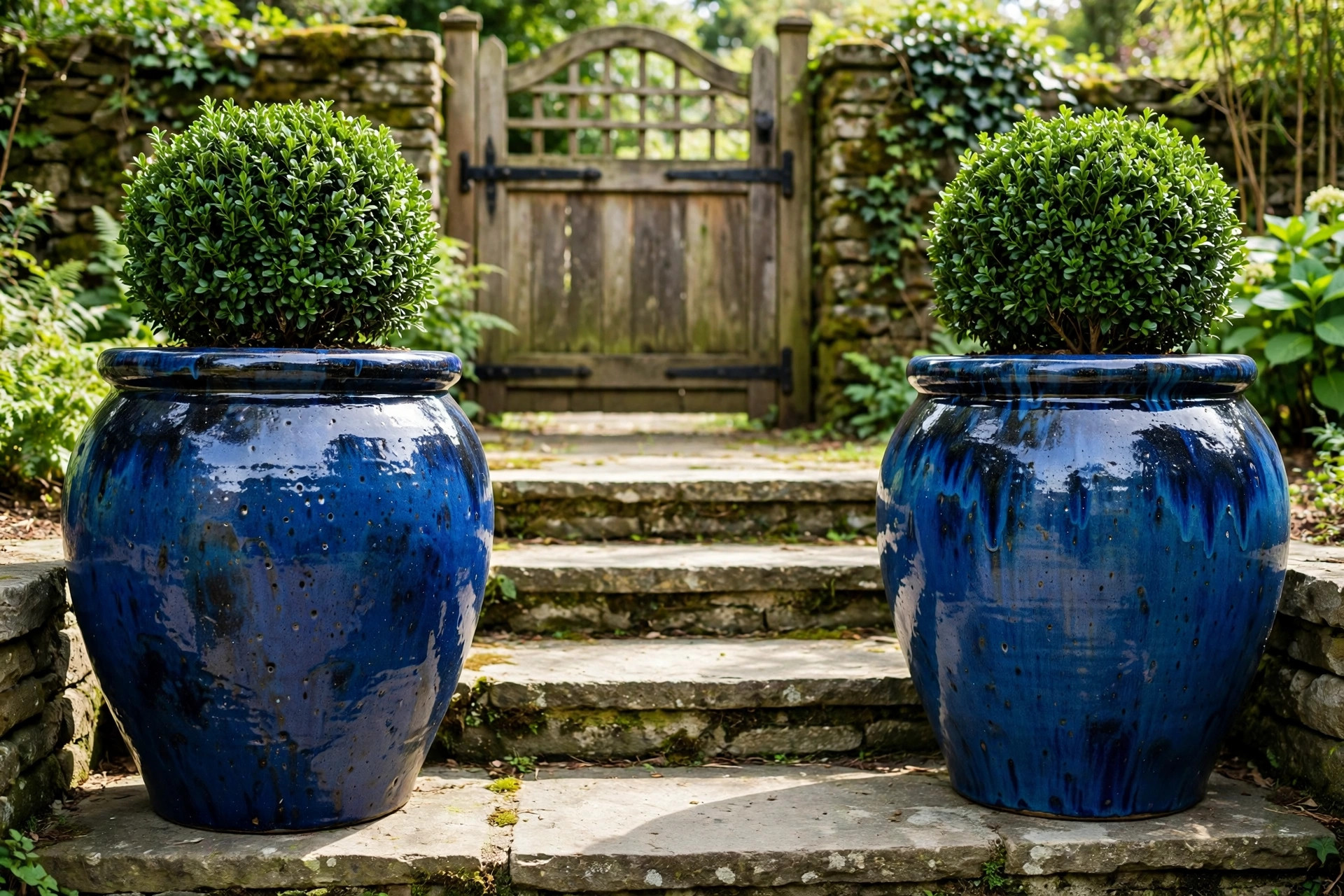
Buying bulk ceramic pots for distributors is a different job from buying for one store. A distributor has to satisfy many different retailers from one container program: garden centers that want proven families in depth, landscapers who need large statement sizes, and regional chains that reorder on a schedule. Get the mix wrong and the warehouse fills with the sizes nobody asked for, while the sizes everybody wants run out in the first month. This guide covers how experienced distributors build a bulk ceramic program that moves — size mix, glaze planning, packing, and the landed-cost math underneath it all.
Build the program around your retailers, not the catalog
Start with a simple audit of your top accounts. Which pot sizes do they reorder, which glazes survive a full season on their benches, and where do they lose sales because a size or saucer was missing? Distributors who buy from that list — instead of from a supplier's full catalog — routinely carry fewer dead SKUs and turn their inventory faster.
Think in families, the same way good garden center buyers do. A family is one shape and glaze in nested sizes with matching saucers. For distribution, three to five strong families per container is usually the right depth: enough choice for different retailers, enough volume per SKU to justify the mold, kiln and packing economics explained in our guide to custom ceramic planter MOQs. For how to judge suppliers against each other, see our direct answer on who the best wholesale ceramic planter manufacturers for US importers are. Our wholesale range is organized this way on purpose — ceramic families, decor and companion lines that nest, pack and reorder together.
Reserve part of every container for large statement pots, like the cobalt pair pictured above. They are a small share of units but a large share of margin, and they give your retailers a hero piece for displays. The volume, though, lives in the mid sizes — plan those first and let the heroes round out the load.
Sizes, glazes and private label options
A workable bulk mix for most regional distributors looks like this: roughly 60–70% of units in the core 6- to 12-inch range, 20–25% in small accent sizes, and 10–15% in large statement sizes. Adjust it with your own reorder data after the first container — the second container should be weighted by what actually sold, not by what the first order guessed. Our guide to wholesale ceramic pots for garden centers shows the bench-level view your retailers are buying from, which is worth reading before you lock a mix. If you are still shortlisting who to buy from, work through our guide to choosing a garden pottery wholesale supplier first.
On glazes, anchor in neutrals and proven reactive finishes that photograph well and hide handling marks, then add one seasonal color story per program. Judge color on physical samples in daylight, never on a screen. If key accounts want the range under their own name, a private label garden decor program or an exclusive OEM ceramic planter family gives them something competitors in the same territory cannot copy — a strong reason for a retailer to consolidate volume with you.
Agree the quality standard in writing before production: glaze tolerance, dimensional tolerance, drainage and saucer fit, and frost rating by market. Most distributor–supplier disputes are really undefined-standard disputes, and they are cheapest to prevent at the sampling stage.
Packing, breakage and container math
For a distributor, the real product is not the pot — it is the sellable pot that arrives intact at your warehouse and leaves again in retailer-ready cartons. Ask how pots are nested, what inner packing separates glazed surfaces, what the carton configuration is, and whether cartons are labeled for direct re-shipment to retailers. Nesting quality can change units per container dramatically, and that flows straight into cost per unit.
Breakage belongs in the price comparison. A supplier who is 5% cheaper on FOB but ships with 6% breakage is the more expensive supplier. Compare offers on landed cost per sellable pot: FOB, plus freight, duty and drayage, divided by the pots you can actually sell. Our process page shows how we inspect and pack before the container seals, while problems can still be fixed at the factory.
Freight is the largest variable in that math right now. Far East–US container spot rates hit their 2026 peak in early October, at about $11,523 per 40ft container to the US East Coast, per Xeneta, with elevated costs expected through year-end. At those rates, a well-cubed mixed container — families, sizes and saucers planned together — can beat a cheap, badly packed one by a wide margin on landed cost.
Reorders and territory planning
Plan the reorder cycle when you place the first order. Reorders of proven families are much faster than first orders because molds, glazes and artwork are already approved — but production plus ocean transit still takes months, so work backwards from your retailers' selling season, the same discipline we lay out in how long it takes to develop a custom planter. Share sell-through by size and glaze with your supplier after the first month; the distributors who do get second containers weighted correctly instead of a repeat of the first container's mistakes.
Finally, be clear about territory and channel. If you are investing in building demand for a family in your region, discuss exclusivity terms for that family up front, in writing. Clear terms protect both sides and make the next container easier to plan.
The bottom line
Bulk ceramic pots for distributors work when the program is built from retailer reorder data outward: a few families in real depth, a size mix weighted to the core range, packing judged on landed cost per sellable pot, and a reorder plan agreed before the first container sails.
Garden centers asking the same container question from the retail end can read our direct answer on buying ceramic pots at wholesale by the container — the routes and the landed-cost math are the same, seen from the bench.
Tell us which territories and retailer types you serve, the sizes your accounts reorder most, and your target warehouse date — we will propose a family and size mix sized for distribution, not for a single store. Start the conversation.