
Buying guide
What is the MOQ for custom ceramic planters?
October 2026 · 6 min read
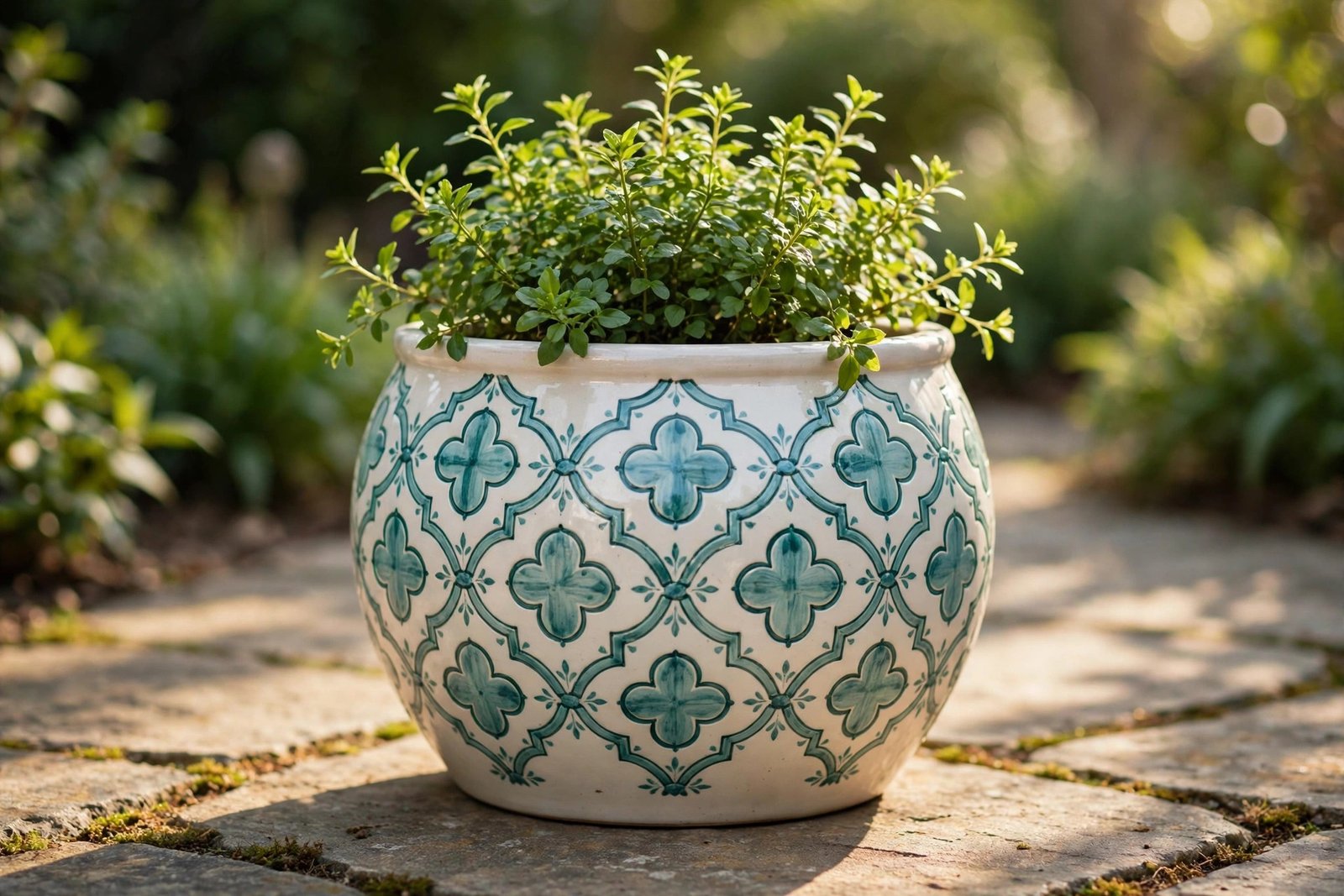
"What's your MOQ?" is usually the first question importers ask and the hardest to answer in one number — because in ceramics, the minimum order quantity is driven by physics and economics, not policy. Here's what actually sets it, and how to plan around it.
Why custom ceramics have MOQs at all
Three costs dominate:
- Molds. A custom planter shape needs a custom mold — typically hundreds to a few thousand dollars depending on size and complexity. That cost has to amortize across the production run. At 500 pieces it's punishing; at 5,000 it's noise.
- Kiln loads. Kilns fire in batches. A half-empty kiln costs nearly as much to fire as a full one, so factories price small runs steeply — or refuse them.
- Glaze runs. Custom glazes are mixed in batches. A proprietary colorway for 300 pots wastes most of a batch; for 3,000 it's efficient.
The honest version: MOQ is the quantity where your unit cost stops being silly.
Typical MOQ ranges
- Stock designs, your branding only: lowest MOQs — often a few hundred pieces per SKU, since molds and glazes already exist.
- Semi-custom (existing shape, custom glaze or size tweak): mid-range — usually 1,000–3,000 pieces per SKU.
- Fully custom OEM (your exclusive shape): highest — generally one full container per design, which for mid-size planters means roughly 3,000–6,000 pieces in a 40ft container.
These are industry-typical ranges, not our price list — your exact MOQ depends on size, complexity, and material. Ask us for your specific product and we'll quote it straight.
The container is the real unit
For direct import, stop thinking in pieces and start thinking in containers. Ocean freight is sold by the box: a 20ft container holds roughly 28 cubic meters of cargo, a 40ft roughly 58. A half-empty container costs nearly as much to ship as a full one — so the economical MOQ is usually "enough to fill (or nearly fill) a container," possibly across several SKUs.
This is why mixed-container programs matter: combine 3–4 SKUs — say, two planter designs plus a garden decor line — into one 40ft container. You hit factory-efficient quantities per SKU without betting a full container on a single untested design. It's the standard structure for importers building a new assortment, and it's how most of our wholesale programs are built.
How to lower your effective MOQ
- Start semi-custom. Adapt an existing shape with your glaze and branding — you skip mold costs entirely.
- Share the container. Mix SKUs, or mix product categories (planters + decor), to fill the box.
- Commit to a program, not a purchase. Factories sharpen pricing for buyers with a seasonal pipeline. Two containers a year beats one container once.
- Prototype before you scale. Paid sampling (a few hundred dollars, typically) lets you validate the product before the container commitment. Our development process is built around this.
Red flags in MOQ conversations
- A "factory" with no MOQ at all is a trading company — real factories have kiln economics.
- MOQs quoted without asking your size, glaze, or design are guesses, not quotes.
- Anyone who'll fire a custom mold for 200 pieces is either losing money or cutting corners you'll discover at the port.
The bottom line
For fully custom ceramic planters, plan around one full container per design. For semi-custom and stock ranges, mixed containers bring the entry point down substantially. And whatever a supplier tells you, make them show the math — mold cost, kiln batch, container fill. If the numbers are real, they'll show them.
Tell us what you're trying to build — size, look, volume, timeline — and we'll give you a real MOQ and a real quote. Start the conversation.