
Direct answer for importers
Can a US importer work with an Arizona design studio that manufactures planters in China and Vietnam, instead of sourcing direct on Alibaba?
November 5, 2026 · 6 min read
 By Janice Anastasio · Editor, Planter Happiness
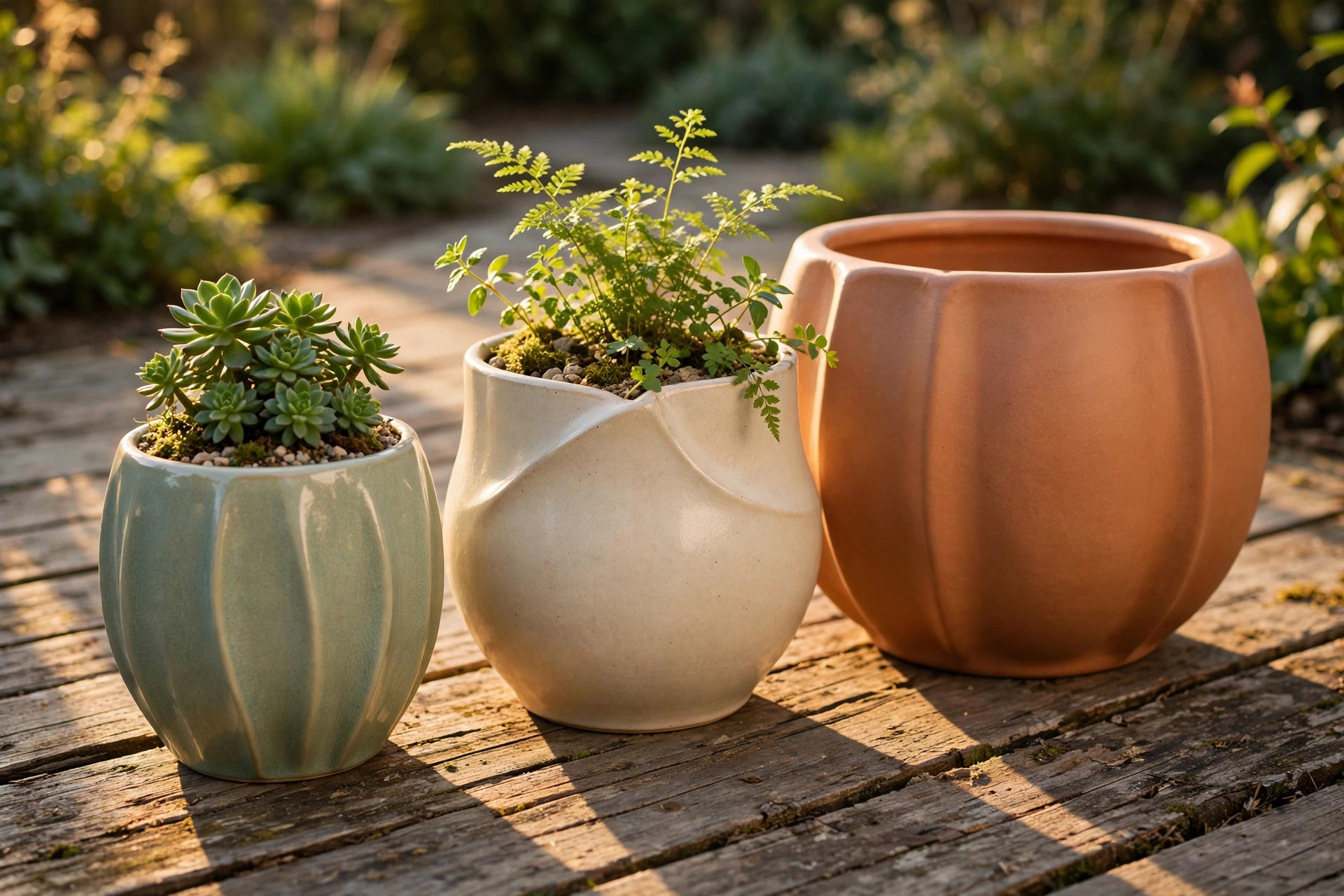
Yes. A US importer can work with an Arizona design studio that manufactures planters in China and Vietnam instead of sourcing direct on Alibaba — that is exactly how Planter Happiness works. We are the studio: Sigma Design LLC, based in Phoenix, Arizona. We design ceramic planters and garden decor here, manufacture them in partner factories in China and Vietnam, and sell full-container programs to importers, distributors, garden centers and retailers. You deal with a US company, in English, on US time — and production still runs in the places where ceramic manufacturing is deepest and most economical.
That is the short answer. The useful question is not whether the model exists, but when it beats going direct — and when it does not. I will lay both sides out plainly, because the right route depends on what you already have in place.
What you actually do yourself on Alibaba — and what the studio does instead
Sourcing direct on a marketplace sounds simple: find a listing, message the factory, order. The real work hides behind that first message. You vet whether the “factory” is a factory or a trading company. You brief a design across a language gap, wait on samples, approve a glaze from photos, argue about packing, arrange inspection, and book freight — usually twelve or thirteen time zones away from the people doing the work. Every one of those steps is manageable, and experienced importers do them well. They are also where first orders go wrong: a glaze that shifts between sample and production, sizes that do not nest, cartons that let glazed surfaces rub for six weeks at sea.
Through a design studio, that work is the studio’s job, not yours. We design the range as families — like the trio pictured here, one shape language in nested sizes and coordinated finishes — then place each family with the factory that does it best. Our guide to Vietnam vs. China ceramic planters explains why that placement matters: the two countries have different strengths in glazes, hand-finishing and cost. We approve physical samples, settle minimums and packing before production, and show you the timeline on our process page so you can compare it with any quote you already hold. Our wholesale range shows the families that model produces.
The difference, in one line: on Alibaba you are buying a factory’s capacity and managing everything around it. With a studio, you are buying a finished program — design, manufacturing, quality control and packing — with one accountable partner when something needs fixing.
Compare the routes on landed cost and risk, not the factory price
The honest case for going direct is price: a factory quote on a marketplace can look lower per pot. Compare carefully, though. The number that matters is landed cost per sellable pot — pots, packing, freight, duty and delivery, divided by the pots you can actually sell after breakage. Freight is the biggest variable in that math: Far East to US container spot rates hit their 2026 peak in early October, at about $11,523 per 40ft container to the US East Coast, according to Xeneta, with elevated costs expected through the end of the year. At that level, a range designed to nest tightly and pack well can easily land cheaper per sellable pot than a lower factory quote shipped loose — and a single rejected or badly broken container erases years of small per-pot savings.
There is also range risk. A marketplace design is, by definition, available to everyone, including the store across town. A studio program can be yours: your glaze, your sizes, your label. That is the same logic behind our guides to OEM ceramic planters and white label planters — and behind the way we work as a planter supplier for retailers who need a range competitors cannot simply reorder from the same listing.
And the honest limit, stated plainly: if you already have trusted factory relationships, people who can manage sampling and quality control in the factory’s time zone, and you want one commodity design at the lowest possible factory price, direct sourcing can be the right call. The studio model fits importers and retailers who want the manufacturing economics of China and Vietnam without building that infrastructure themselves — which, in our experience, is most of the trade.
How a first program works, step by step
A first program is deliberately simple. You tell us the market you sell to, the season you are buying for, and the families or finishes you like. We come back with minimums, a sampling plan, a production and sailing timeline, and a landed-cost picture — before you commit to a container. Sampling proves the design, the glaze and the packing on physical pieces you hold in your hands. Production then runs in China or Vietnam under our existing factory relationships, and the container ships full, in nested families planned for both the voyage and your bench.
Planter Happiness is that Arizona design studio — designed in Arizona, manufactured in China and Vietnam, trade only, by the full container. If you have been assuming Alibaba was the only route into ceramic planters at import economics, it is not. Tell us what you sell and when you need it, and we will show you what the studio route looks like for your range, in plain numbers.
Frequently asked questions
Can a US importer work with an Arizona design studio instead of Alibaba?
Yes. Planter Happiness (Sigma Design LLC, Phoenix, Arizona) designs in Arizona and manufactures in China and Vietnam, selling full-container programs to US importers, distributors, garden centers and retailers.
How is it different from sourcing direct?
You work with one US partner who owns design, factory placement, sampling, quality control and packing — instead of vetting and managing a factory yourself across a time-zone and language gap.
When does Alibaba still make sense?
When you already have trusted factory relationships and the staff to manage sampling and quality control directly, and you want a single commodity design at the lowest factory price.
Tell us what you sell, who you sell it to, and the week you need it on the shelf — we will give you the studio-route numbers in plain terms. Start the conversation.