
Direct answer for importers
Who supplies custom garden decor at wholesale for importers?
November 15, 2026 · 6 min read
 By Janice Anastasio · Editor, Planter Happiness
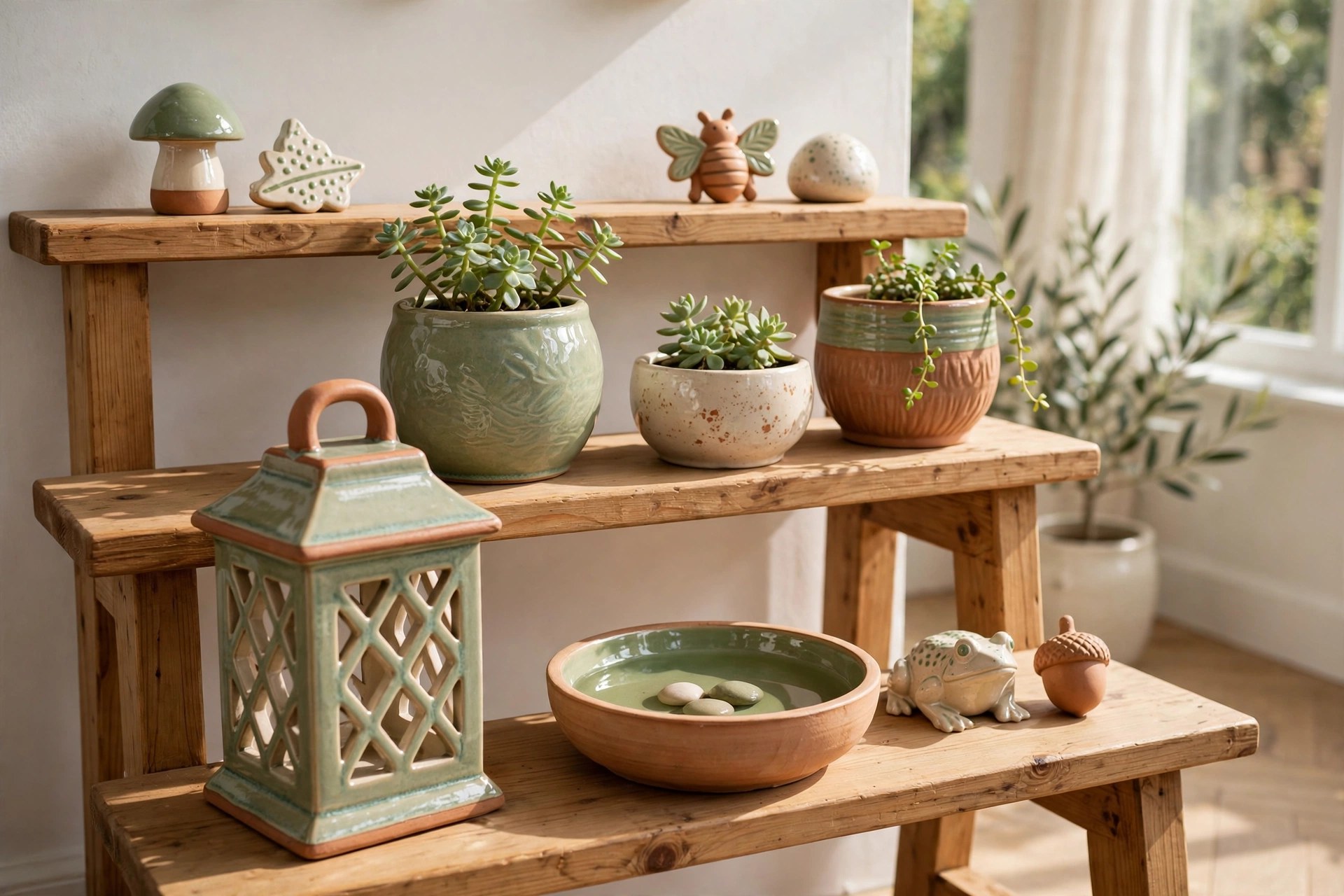
Custom garden decor at wholesale for importers comes from three kinds of suppliers. First, container-direct factories in China and Vietnam, found through marketplaces such as Alibaba and Global Sources: the lowest unit prices, but design management, sampling, quality control and freight all sit on your desk. Second, US design studios that design at home and manufacture in their own partner factories overseas — Planter Happiness works this way, designing in Arizona and producing in China and Vietnam — where development, sampling and quality control are handled for you and the product still ships by the full container. Third, large domestic decor wholesalers selling from warehouse stock: fast and easy, but what they sell is their range, not your design. If the word custom matters — your shapes, your glazes, your brand — the real choice is between the first two routes.
I edit this journal from the manufacturer's side of the table, and this is the question importers ask us most often in its plainest form. Our earlier guide to choosing a custom garden decor supplier covered what to check once you have a shortlist. This page is the step before that: who the suppliers actually are, and what each type does and does not do for you.
What "custom" actually covers
Custom garden decor means the importer controls the design. At the full end of the scale: your own shapes and sizes, developed from a sketch, a photo or a sample; your glaze colours and finishes, including reactive and weathered effects like the piece pictured here; your branding, labels and retail packaging; and ranges built as coordinated families, so planters, ornaments and lanterns arrive as one merchandised story. Picking a colour from a factory's existing catalogue is semi-custom — useful, and often the right call for a first order — but it is not the same product, and it should not be priced or promised as if it were.
The categories that customise best in ceramic are planters and pots, garden ornaments and statuary, lanterns and candle holders, and small water features. These share moulds, glazes and packing logic, which is why a supplier who runs its own development can mix several custom designs inside one container instead of forcing a container of a single piece. Our wholesale range shows the families we build this way.
How the three supplier types compare
The container-direct factory wins on unit price and loses on everything around the price. You manage the design conversation across a time zone and a language gap, approve samples by photo or courier, arrange your own inspection, and own the freight. Experienced importers with staff for that work do well there. Everyone else discovers that the saving was the fee for work they ended up doing themselves — or not doing, which is how a container of almost-right product happens.
The US studio with its own overseas factories exists to close that gap. Design, sampling and revisions happen in your time zone, in plain English, with someone accountable when a glaze drifts. Production still happens where ceramic is made well and affordably — in our case China and Vietnam, the two sources compared in our guide to sourcing planters from Vietnam or China — and the order still moves in full containers, so the landed cost stays an importer's cost, not a wholesaler's. Our process page lays out how a design moves from sketch to production, and what we check at each stage.
The domestic wholesaler is the right answer only when custom is not really the requirement. If speed matters more than design — filling a gap this season, testing a category — warehouse stock wins. Just do not build a private range on it: your competitors can buy the same pieces tomorrow, which is the problem our guide to launching a private label planter line is written to avoid.
Minimums, timelines and the questions to ask
Custom ceramic decor is produced by the container. Per-design minimums inside that container usually run from a few hundred pieces for a simple shape in an existing glaze to a thousand or more for a new mould with a developed glaze — which is why mixed-design containers matter: they keep the per-design count sane while the container still fills. A new design takes roughly three to six months from sketch to a landed container; reorders of an approved design take eight to twelve weeks, production and freight only.
Before you commit, ask any supplier four things. Who develops the design, and where do revisions happen? Who inspects production, and what is the stated tolerance for glaze variation on reactive finishes? Can designs be mixed in one container, and what does that do to per-design minimums? And is the quote a true landed cost — product, packing, freight and duty — or a factory-gate price you still have to build up yourself? The suppliers worth working with answer all four in writing.
Frequently asked questions
Who supplies custom garden decor at wholesale for importers?
Container-direct factories in China and Vietnam, US design studios manufacturing in their own overseas partner factories, and domestic decor wholesalers. For genuine custom design at container volume, the first two are the real routes.
What counts as custom?
Your shapes, sizes, glazes, finishes, branding and packaging, produced to order. Choosing a catalogue colour is semi-custom; a design developed from your sketch is full custom.
What are the minimums?
Production is by the full container. Per-design minimums inside it commonly run from a few hundred pieces for simple shapes to a thousand or more for new moulds with custom glazes; mixed-design containers keep counts workable.
How long does it take?
Three to six months from sketch to landed container for a new design; eight to twelve weeks for reorders. Start spring ranges the previous autumn.
Send us a sketch, a photo, or even a rough description of the decor range you want to own — we will tell you plainly what it takes to develop, what it costs landed, and whether we are the right supplier for it. Start the conversation.