
Importer assortment guide
How to build a mixed container of ceramic planters
November 20, 2026 · 6 min read
 By Janice Anastasio · Editor, Planter Happiness
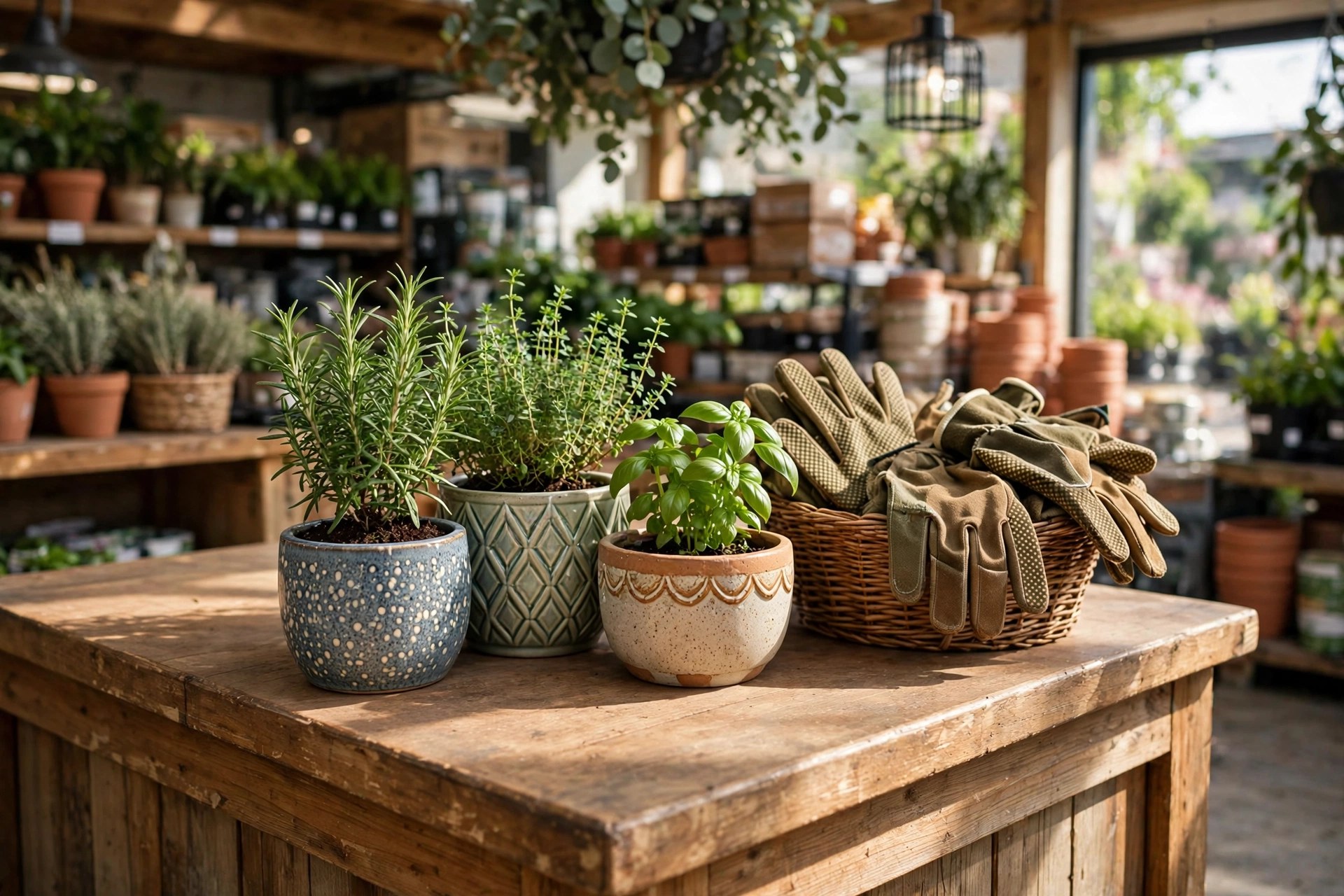
Learning how to build a mixed container of ceramic planters is how most importers, distributors and garden centers actually buy. Very few buyers need a full container of one pot. What they need is a full container that behaves like a range: two or three planter families in nested sizes, matching saucers, and a garden decor line that fills the gaps and lifts the average sale. Done well, a mixed container spreads risk across designs, keeps every design at a factory-efficient quantity, and pays the same freight for a far more saleable load. Done badly, it is a random pile of samples that happens to fill a box. The difference is planning, and it happens before production starts.
I plan mixed containers with buyers all season, and the working rule is simple: build the assortment first, then let the container follow it. Start from the range on our products page and the sequence on our how we work page, then use the minimums explained in what the minimum order quantity for custom ceramic planters really is — because in a mixed load, the minimum applies per design, not per container, and that one fact shapes everything below.
Start with families, not single pots
A family is one shape and glaze in three to five nested sizes, plus its saucer. Families merchandise as a wall or an endcap, they let a customer trade up a size without leaving the display, and they nest — which is where the container math is won. Three strong families with real depth will usually outsell eight shallow ones, and they are far easier to reorder. For a first mixed container, a proven split is two core families in your best-selling glazes, one newer family you are testing, and one decor companion — lanterns, bowls or ornaments — that shares the same glaze palette so the whole load photographs and displays as one range.
Balance the sizes inside each family the way your customers actually buy. The middle sizes carry the volume; the largest size is the hero that anchors the display and makes the middle look like good value; the smallest size is the add-on and the gift purchase. Weight the quantities that way too — do not split a family evenly across five sizes and then wonder why the hero sold out in a week while the smallest size is still there in August. If you sell to garden centers, check the family against the plant sizes they stock most, the same discipline we set out in wholesale ceramic pots for garden centers: a pot range that does not match the plant table is decoration, not a planter range.
Make the minimums and the cube work together
Each design in a mixed container still has to clear its own minimum — a few hundred pieces for a stock design with your branding, more for a new glaze, and more again for a fully custom shape that needs its own mold. That is not a supplier being difficult; it is mold, kiln and packing economics. The mixed container is how you respect those minimums without betting a season on one shape: four designs at efficient quantities fill the same container as one design at four times the risk. If a design you love cannot clear its minimum inside the mix, the honest options are to carry it as a stock or white label version, to drop it to a later container once it is proven, or to let a stronger family take its space. Never pad a weak design to its minimum by cutting the proven sellers below theirs.
Then plan the cube. Nesting families ship far more units per container than shapes that ship air, and saucers, small pots and decor pieces belong in the voids the large pots create — planned on the load plan, not discovered on the dock. Heavy cartons go low and along the centreline, light cartons high and outboard, and the range you need first at your warehouse is loaded last so it comes off first. Our guide to how to load a container of ceramic planters covers the physical build in detail; the point here is that the assortment and the load plan are the same document. When freight is the largest variable cost in the order — Far East to US spot rates peaked in early October 2026 at about $11,523 per 40ft container to the East Coast, per Xeneta — every cubic metre you fill with saleable product instead of air lowers the landed cost of every pot in the load.
Protect the mix: packing, checking and reordering
A mixed load needs clearer paperwork than a single-design load, because a mistake is harder to spot. Every carton should be marked by family, size and glaze, with the barcode and retail packaging agreed before production — not while the cartons are being sealed. Keep one approved sample per design as the comparison standard, and have the pre-shipment inspection check the mix itself, not just the quality of individual pieces: counts per design, glaze against the approved sample, saucers matched to pots — to the fit and depth set out in our drainage holes and saucers specification. A container can pass a quality check and still arrive wrong if nobody verified that the proportions inside it are the proportions you ordered.
Finally, treat the first mixed container as the draft of the second. Note sell-through by family and by size in the first month, while the data is fresh. The family that empties first earns more space next time; the size that stalls gets cut without sentiment. Because the molds exist, the glazes are approved and the packing is proven, the second container is faster, cheaper to plan and much better weighted than the first. That learning loop is the real return on a mixed program — not just a full box this season, but a range that gets sharper every season. If you are building a mixed container now, send us the families and sizes you have in mind through contact us and we will work the quantities, minimums and load plan with you before anything goes into production.